
Home › Articles › Assertive Communication for Teens: How To Help Your…
Horizon Services Program: Project Eden (Hayward)
Learn assertive communication for teens. Give teens the skills to express themselves confidently and respectfully to overcome peer pressure & build self-esteem.


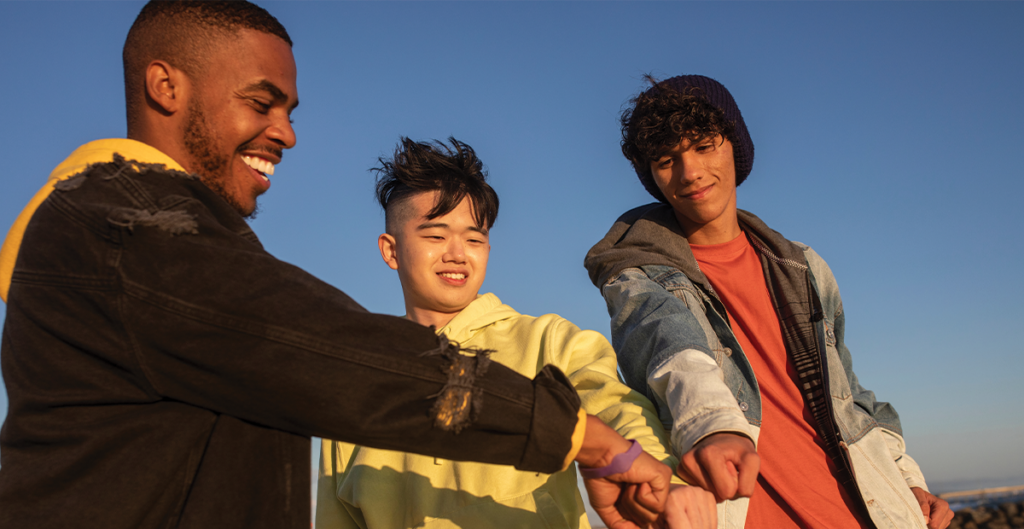
Let’s face it, sometimes you need to challenge inappropriate behavior, set or reassert a boundary, or resolve a conflict. This is where developing assertiveness skills can help.
Assertiveness is about being direct, respectful, and confident. It empowers teenagers to express their thoughts, feelings and needs effectively while respecting others. Assertiveness is a much better communication strategy compared to passivity, aggressiveness, and passive-aggressiveness. And developing assertiveness skills can lead to more positive relationships.
Assertive communication is crucial for personal and professional success. So teaching teens how to communicate assertively is more important than ever. This guide to assertive communication for teens can help you get there.
Need help navigating peer pressure or becoming more assertive? Reach out to us at Project Eden to see how we can help.
Assertive communication involves expressing oneself clearly, honestly, and respectfully. It is distinct from other types of communication behavior, such as passive, aggressive, and passive-aggressive behavior:
Not sure where to start? We can help you find the right program in your county. Most services are no cost or covered by Medi-Cal for those who qualify.
Assertive communication for teens strikes a balance by being direct and respectful. It allows teens to stand up for their rights and express their needs while considering the rights and needs of others.
Remember, the fastest path to healthier relationships is the direct path. That’s what assertive communication for teens brings to your relationships.
Assertive communication can be challenging for teens due to factors like fear of rejection, peer pressure, fear of retaliation, personal insecurities, shyness, social anxiety, lack of role models, and some cultural norms. Understanding these barriers is the first step in overcoming them. Encouraging self-reflection, providing supportive environments, and offering practical strategies can help teens develop this vital skill.
Self-awareness involves understanding your own needs, desires, and emotions. Developing self-awareness helps teens communicate more effectively and assertively. Encourage teens to reflect on their values, identify emotions, understand triggers, practice mindfulness, and keep a journal. Relationships should be based on mutual respect and healthy conflict-resolution strategies.
Ready to talk to someone? Everyone is welcome here, and there is no judgment in reaching out.
Setting and maintaining personal boundaries is essential for healthy relationships and self-respect. It’s also essential to recognize personal limits, communicate boundaries clearly, use assertive language, be consistent, anticipate pushback, respect others’ boundaries, and seek support. With the right communication skills and self-confidence, boundaries don’t have to be so hard.
Cultivating assertiveness involves practicing specific techniques and adopting a mindset of clear, respectful communication. Here are some strategies to help teens develop assertive communication skills:
Assertive communication is a powerful tool for teenagers, equipping them with the skills to navigate social interactions confidently and respectfully. By learning to express their thoughts, feelings, and needs clearly and assertively, teens can build strong relationships, enhance their self-esteem, and effectively manage conflicts.
Helping your teen understand assertive communication and role modeling it for them will benefit them for a lifetime. Start today by talking with your teen about assertive communication.
Ready to build skills for handling peer pressure and uncomfortable situations? Reach out to us at Project Eden to see how we can help.
Written by
Holly Tracy was born and raised in Seattle, Washington, where her love for the ocean was shaped by time spent fishing, surfing, and camping along the Pacific Northwest coast. Those early experiences instilled in her a deep appreciation…